By the Vitalvyn Editorial Team · Published on · 11-minute read
Does turmeric help blood pressure?
Turmeric has gone from the spice rack to the supplement shelf, and blood pressure is one of the reasons people reach for it. Some websites promise a natural alternative to tablets; others dismiss it entirely. The truth sits in between. This guide looks at what the research really shows, why black pepper keeps appearing on the label, who needs to be careful and how to use turmeric sensibly.
First: what turmeric can and cannot do
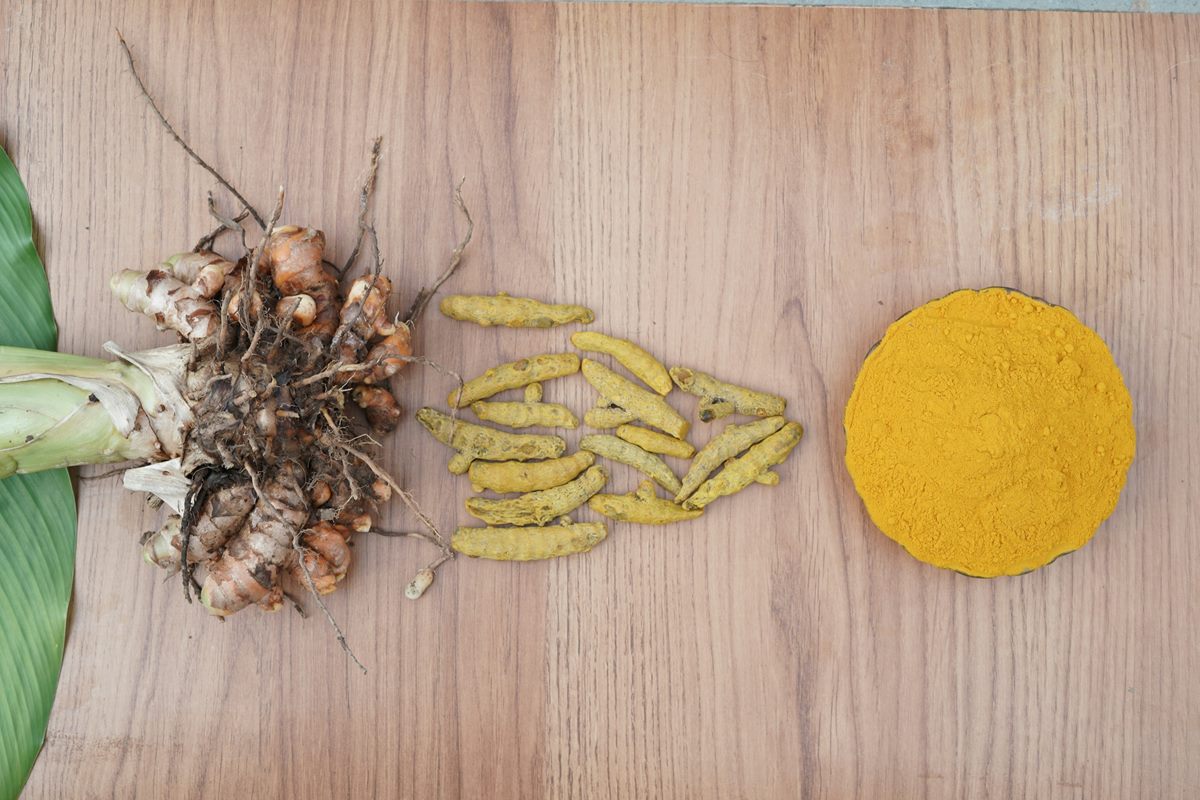
Turmeric is a root from the ginger family, and its bright yellow colour comes from a group of compounds called curcuminoids — mainly curcumin. Curcumin has been studied in hundreds of laboratory and clinical trials, and blood pressure is one of the areas researchers keep coming back to.
Here is the honest summary before the detail: the effect on blood pressure in human trials has been small and inconsistent. Turmeric is not a treatment for high blood pressure, it will not do the job of a prescribed medicine, and no health claim for turmeric or curcumin on blood pressure is authorised in the EU or UK. What it can be is one modest, enjoyable part of a routine built on the things that reliably move the numbers.
Trial results on blood pressure are mixed and the effects small.
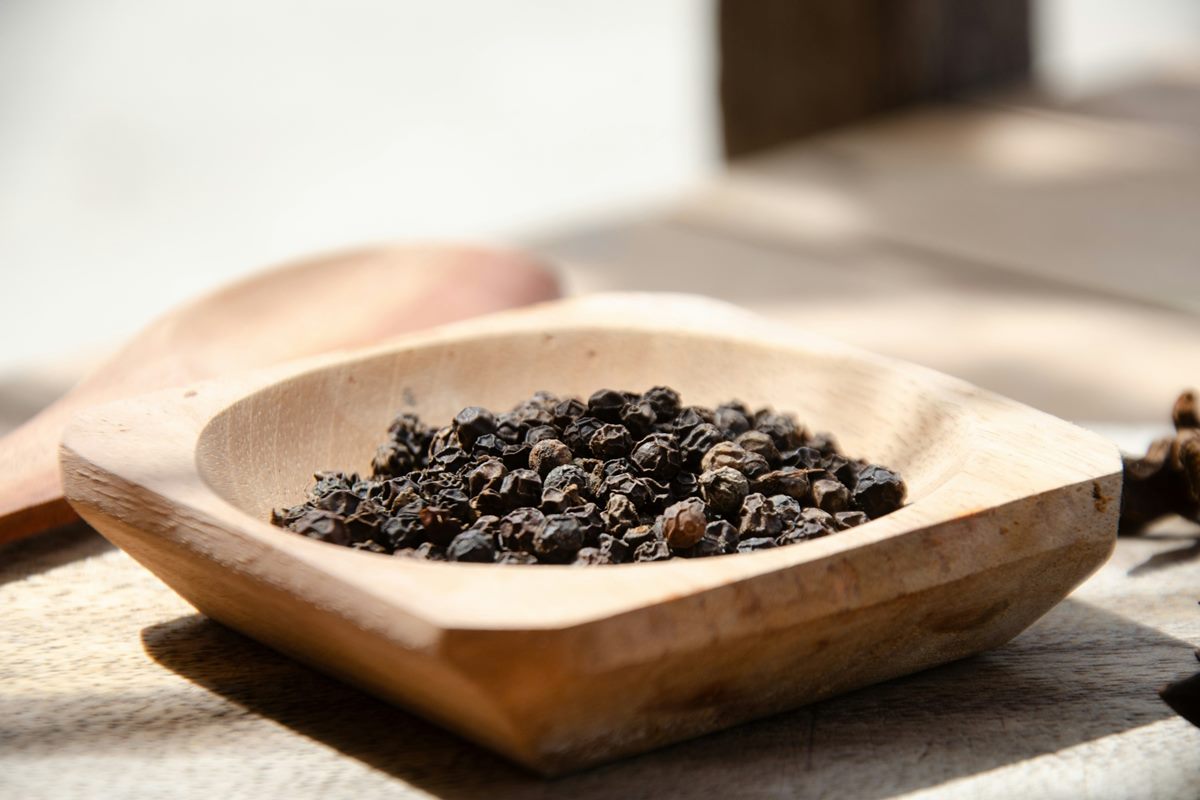
Curcumin is poorly absorbed; black pepper (piperine) helps.
Supplements can interact with blood thinners and other medicines.
Salt, activity, weight and medication matter far more.
If you want to try turmeric: 5 practical points
If you have decided to give turmeric a fair trial, these five points make the difference between a sensible experiment and money spent on guesswork.
Check your medicines first
This comes first for a reason. Concentrated curcumin and piperine can interact with blood thinners such as warfarin, antiplatelet medicines such as clopidogrel or aspirin, and diabetes medicines. If you take anything on prescription — including blood pressure tablets — ask your pharmacist or GP before you start.
Look for a standardised amount of curcumin
Turmeric powder naturally contains only a few per cent curcumin. A useful label tells you how much curcumin or curcuminoids you actually get per daily dose, rather than just “turmeric” or a proprietary blend with no amounts.
Pair it with black pepper extract
On its own, very little curcumin reaches the bloodstream. Piperine, from black pepper, slows the body’s breakdown of curcumin and increases how much is absorbed. That is why so many turmeric products include it — and why the safety advice above matters.
Take it consistently, around meals
Follow the label and take it at the same times each day. Curcumin is fat-soluble, so taking it around a meal helps, and consistency matters more than any single dose.
Give it 12 weeks and measure at home
Where trials found any effect, it tended to appear after 12 weeks or more. Take a week of home readings before you start and another after three months, using the same validated upper-arm monitor, so you can judge with numbers rather than impressions.
One thing not to wait on
If your home readings average 135/85 mmHg or more, or a clinic or pharmacy reading is 140/90 mmHg or more, see your GP rather than waiting to see whether a supplement helps. And call 999 if a very high reading (180/120 mmHg or more) comes with chest pain, breathlessness, a severe headache, confusion, changes in vision or weakness on one side of the body.
Why curcumin interests researchers, briefly
Blood pressure depends partly on how easily your arteries can widen and relax. That flexibility is controlled by the endothelium, the thin layer of cells lining every blood vessel, which releases nitric oxide to help the artery wall relax. Long-term inflammation, oxidative stress, ageing, smoking and high blood sugar all make the endothelium work less well.
The theory. In laboratory and animal studies, curcumin has shown anti-inflammatory and antioxidant activity and appears to support nitric oxide signalling in blood vessels. Some small human studies have measured better endothelial function, such as how well the artery in the arm widens after a cuff is released, after several weeks of curcumin.
The caveat. These are plausible mechanisms, not proof of a meaningful effect on blood pressure. Laboratory studies often use concentrations that are hard to reach in the human body, and an improvement in a vessel measurement does not automatically translate into lower readings. That is why the clinical trials matter most.
Most turmeric and curcumin trials have been small and short, with different doses, products and groups of people. Here is what the pooled evidence says — and what it does not.
Blood pressure trials: modest and mixed
A 2019 systematic review and meta-analysis (Hadi et al., Pharmacological Research) pooled 11 trials with 734 participants and found no significant overall effect of curcumin or turmeric on systolic or diastolic blood pressure. The authors noted a possible benefit for systolic pressure when it was taken for longer periods.
Later analyses point in a similar direction. A 2023 dose-response meta-analysis in Nutrition, Metabolism and Cardiovascular Diseases again found no overall effect, but a reduction in diastolic pressure in studies lasting 12 weeks or more. A 2024 meta-analysis reported small average reductions of about 2 mmHg systolic and under 1 mmHg diastolic.
In context: cutting salt, moving more and losing excess weight can each lower blood pressure by several points, and prescribed medicines are more effective still. Turmeric, at best, adds a little at the edges.
The absorption problem — and why black pepper matters
Curcumin has a well-known weakness: very little of it is absorbed from the gut, and what is absorbed is quickly broken down by the liver and intestine. This is one reason some trials may have found little effect.
Piperine, the compound that gives black pepper its bite, slows that breakdown. In a small study published in 1998 (Shoba et al., Planta Medica), giving 20 mg of piperine together with curcumin increased the amount reaching the bloodstream about twentyfold in healthy volunteers. Later studies have not always found such a large effect, but piperine is now the most common partner for curcumin in supplements.
Worth knowing: because piperine also affects how the body processes some medicines, better absorption is a reason for more care, not less.
Piperine from black pepper slows the breakdown of curcumin in the body.
Turmeric in food versus supplements
A teaspoon of ground turmeric (about 3 g) contains perhaps 100 mg of curcumin or less, and only a small fraction of that is absorbed. Most trials used concentrated curcumin extracts, often several hundred milligrams a day or more. Cooking with turmeric is therefore unlikely to change your blood pressure readings directly.
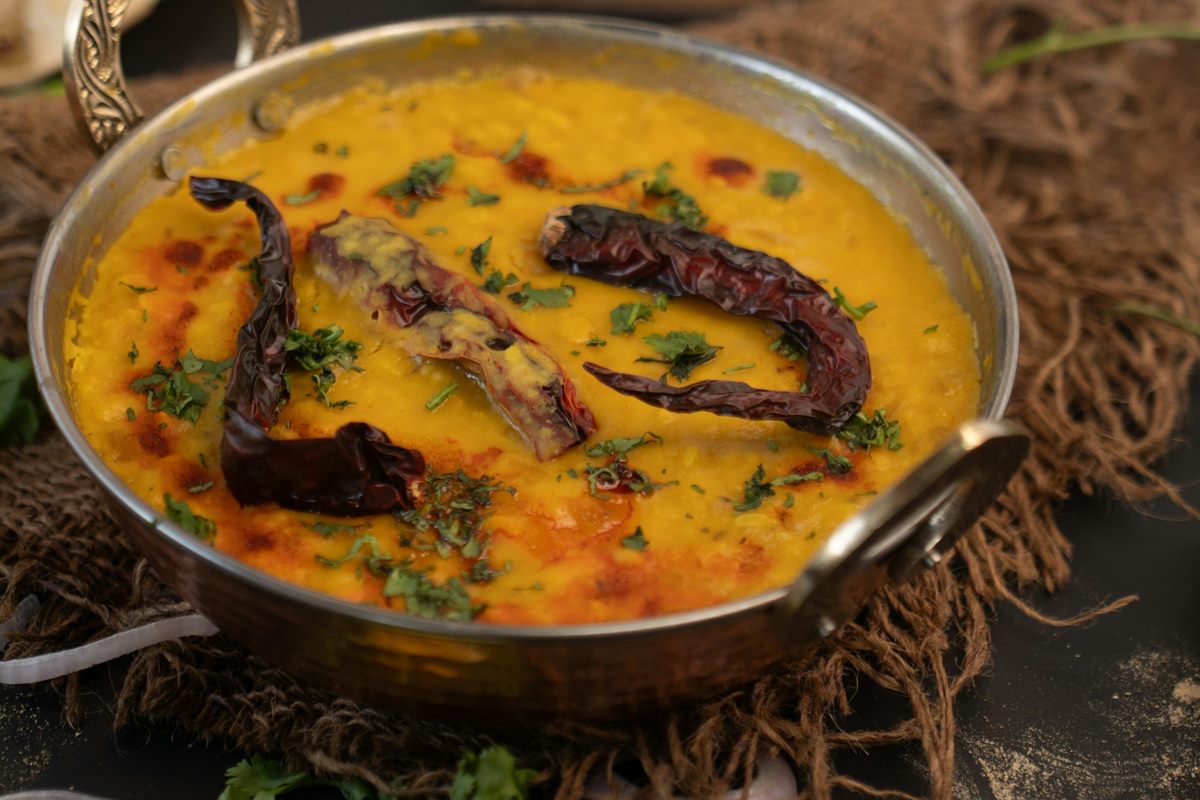
But it can help indirectly. Turmeric, black pepper, ginger, garlic and cumin add depth and warmth to food, which makes it much easier to cut back on salt — and reducing salt is one of the most reliable ways there is to lower blood pressure. Dishes such as lentil dal, vegetable curries and bean stews also tick several other boxes: plenty of vegetables, pulses and fibre.
Try this: cook one turmeric-spiced pulse or vegetable dish a week and season it with spices and lemon rather than salt or stock cubes.
Spices like turmeric make it easier to cook with less salt — a proven way to lower blood pressure.
Safety and interactions
Turmeric used in cooking is safe for almost everyone. Concentrated supplements need more thought. The European Food Safety Authority has set an acceptable daily intake for curcumin used as a food colour (E 100) of 3 mg per kilogram of body weight per day — about 210 mg for a 70 kg adult.
Side effects are usually mild: indigestion, nausea or loose stools. More seriously, turmeric supplements have rarely been linked to liver injury. A 2023 report from the US Drug-Induced Liver Injury Network (Halegoua-DeMarzio et al., American Journal of Medicine) described 10 cases, and some of the products involved also contained piperine. Such reactions are uncommon, but they are real.
Stop and seek advice if you notice yellowing of the skin or eyes, dark urine, pain in the upper right abdomen or unusual tiredness while taking a turmeric supplement.
Blood thinners and antiplatelets
Curcumin may add to the effect of medicines such as warfarin, apixaban, clopidogrel or aspirin, raising the risk of bleeding. Speak to your doctor or pharmacist first.
Diabetes medicines
Curcumin may lower blood sugar slightly, which can add to the effect of diabetes treatment. Monitor carefully and ask your diabetes team.
Gallstones and liver problems
Turmeric stimulates bile flow, so supplements are best avoided with gallstones or a bile duct obstruction, and with liver disease, unless a doctor advises otherwise.
Pregnancy, breastfeeding and surgery
Supplements are not recommended in pregnancy or while breastfeeding, and should usually be stopped before planned surgery. Check with your care team.
A simple weekly routine
Turmeric is at its most useful as one small part of a routine whose other parts do the heavy lifting. Something like this is realistic for most people:
Every day: at least 20 to 30 minutes of brisk walking, and meals built around vegetables, fruit, wholegrains and pulses.
Every day: salt kept to no more than 6 g — season with turmeric, black pepper, herbs, garlic and lemon instead.
Three or four days a week: a short isometric session, such as a wall squat held for up to two minutes, four times with rests, breathing normally.
Twice a week: a turmeric-spiced pulse or vegetable dish, such as dal, chickpea curry or a bean stew.
Most evenings: alcohol-free, with a set wind-down time and seven to nine hours in bed.
If you take a supplement: the same times every day, as directed on the label, after checking with your pharmacist about your medicines.
Once a month: a week of home blood pressure readings, morning and evening, written down to share with your GP.
This is the most important point on the page. No turmeric product is a substitute for prescribed treatment. Stopping medication can let blood pressure rise quickly and increase the risk of a stroke or heart attack. Any change to your treatment should be made with your doctor.
Products that promise to “cure” or “normalise” blood pressure
Food supplements cannot legally claim to treat or cure a disease, and no blood pressure claim for turmeric is authorised. A product that promises dramatic results, hides its doses in a proprietary blend or has no traceable company behind it is a reason to walk away.
Doubling up on high-dose products
Taking several turmeric, curcumin or “high-absorption” products at once, or more than the label recommends, raises the risk of side effects without any evidence of more benefit. Stick to one product and the stated dose.
Ignoring warning signs
Yellowing skin or eyes, dark urine, upper abdominal pain, unusual bruising or bleeding are reasons to stop a supplement and speak to a doctor promptly, not to push on.
Judging by how you feel
High blood pressure rarely causes symptoms, so feeling better tells you little about your readings. The only way to know whether anything is working is to measure properly at home and share the results with your GP.
The part rarely said out loud
The things that move blood pressure the most are rarely the things that make headlines.
A short conversation with your GP or pharmacist is worth more than any amount of online reading.
A spice is an appealing answer: natural, ancient, easy to add to the day. Less salt, a daily walk, a smaller waist, fewer drinks and a tablet taken every morning are less exciting — but they are what bring blood pressure down by meaningful amounts.
That does not make turmeric pointless. Many people find that taking something every day helps them stay committed to the bigger changes, and cooking with spices is a genuinely useful way to eat less salt. The risk is only when the spice becomes a reason to skip the rest.
If you take blood pressure medicine and want to add a supplement, tell your GP or pharmacist. It is a routine question for them. They can check for interactions, suggest how to monitor your readings and make sure everything you take is working together.
And if your readings are high and you have not yet seen anyone about them, that appointment matters more than any product on any shelf.
When medical advice is important
This page is about turmeric as one possible part of a healthy routine. Some situations call for a doctor rather than a better routine, and a few should not wait.
Seek help urgently if…
a reading of 180/120 mmHg or more comes with chest pain, breathlessness, a severe headache, confusion or changes in vision (call 999),
you notice face drooping, arm weakness or slurred speech — possible signs of a stroke (call 999),
you develop yellowing of the skin or eyes, dark urine or upper abdominal pain while taking a turmeric supplement,
you have unusual bleeding or bruising while taking a blood thinner and a supplement.
Book a GP or pharmacist appointment if…
your home readings average 135/85 mmHg or more, or a clinic reading is 140/90 mmHg or more,
you take blood thinners, antiplatelet, diabetes or blood pressure medicines and want to start a supplement,
you have gallstones, liver disease or a planned operation,
your readings are not improving despite treatment and lifestyle changes.
The information on this page is general guidance to support your routine. It does not replace a diagnosis, personalised advice or care from a healthcare professional.
Hadi A, et al. The effect of curcumin/turmeric on blood pressure modulation: a systematic review and meta-analysis. Pharmacol Res. 2019;150:104505. PMID 31647981
Meta-analysis of curcumin/turmeric supplementation and blood pressure, 2024. PMID 38220376
Shoba G, et al. Influence of piperine on the pharmacokinetics of curcumin in animals and human volunteers. Planta Med. 1998;64(4):353–356. PMID 9619120
Halegoua-DeMarzio D, et al. Liver injury associated with turmeric — a growing problem: ten cases from the Drug-Induced Liver Injury Network (DILIN). Am J Med. 2023;136(2):200–206. PMID 36252717
Vitalvyn as complementary support
Blood pressure rarely comes down because of one product. It comes down when salt, activity, weight, alcohol, sleep and stress are moving in the right direction — and when anything medical has been checked and treated. That routine is the foundation.
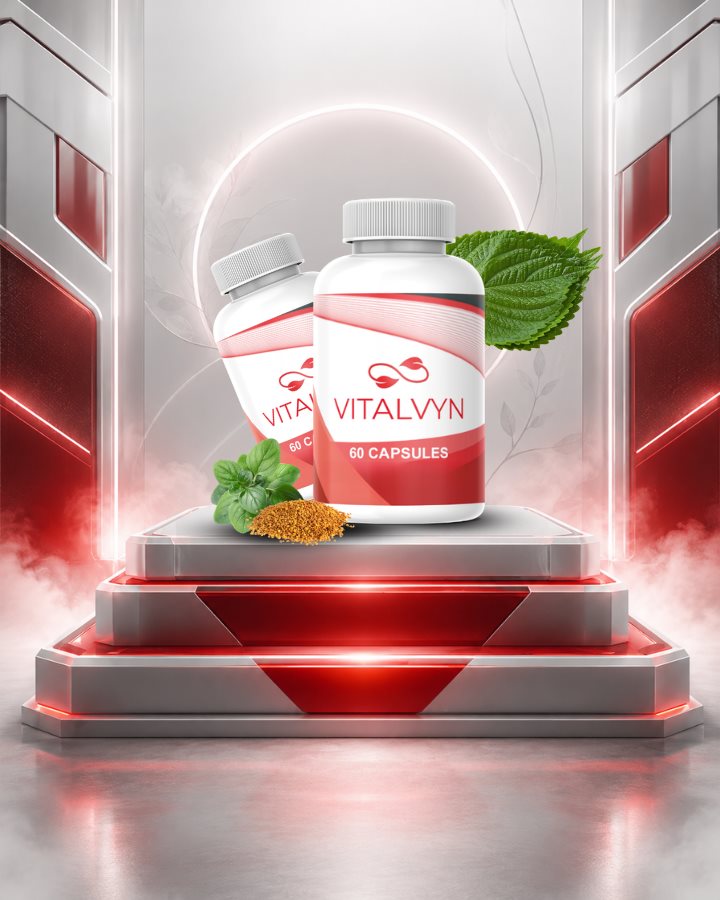
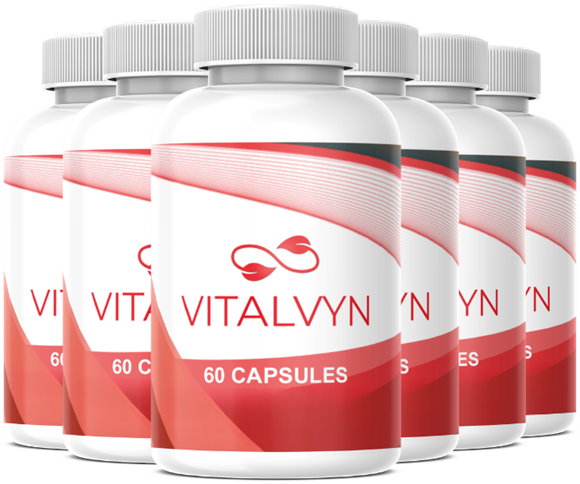
Vitalvyn is a food supplement for adults who want to include turmeric with black pepper extract in that routine: one capsule twice a day, 20 to 30 minutes before a meal with a glass of water. Each bottle holds 60 capsules, enough for 30 days. It is a food supplement, not a medicine. It does not treat high blood pressure, and it does not replace anything your doctor has prescribed.
Sixty capsules per bottle: one before breakfast and one before the evening meal.
Turmeric extract (100 mg, standardised to 95% curcuminoids) – providing 96.8 mg of curcumin.
Black pepper extract, BioPerine® (10 mg, standardised to 95% piperine) – included to support the absorption of curcumin.
Worth saying plainly: the research described above was carried out on individual ingredients and doses, not on this finished product, and its results on blood pressure have been mixed. The curcumin from the extract in a daily dose is below the EFSA acceptable daily intake for an adult of average weight, and every ingredient and amount is on the label, with no proprietary blend.
The full label, how the company works and how the guarantee operates are explained on the Vitalvyn transparency page.
Not suitable for under-18s or for pregnant or breastfeeding women. Do not exceed the recommended daily intake. Food supplements are not a substitute for a varied, balanced diet and a healthy lifestyle. If you take medication — especially blood thinners, antiplatelet, blood pressure or diabetes medicines — or have a medical condition such as gallstones or liver disease, check with your doctor or pharmacist first.
Frequently asked questions about turmeric and blood pressure
Does turmeric lower blood pressure?
The evidence is mixed and modest. A 2019 meta-analysis of 11 trials found no significant overall effect, with a possible benefit for systolic pressure when curcumin or turmeric was taken for longer periods. Some later analyses have reported small reductions of around 2 mmHg systolic and under 1 mmHg diastolic, mostly in studies lasting 12 weeks or more. Turmeric is not a treatment for high blood pressure and does not replace medication or lifestyle changes.
Why is turmeric often combined with black pepper?
Curcumin, the main active compound in turmeric, is poorly absorbed and quickly broken down by the body. Piperine, a compound from black pepper, slows that breakdown. In a small 1998 study, 20 mg of piperine increased the amount of curcumin reaching the blood about twentyfold, although later studies have not always found such a large effect. Better absorption also means any interaction with medicines may be stronger, so the same safety advice applies.
Can I take turmeric with blood pressure medication?
Cooking with turmeric is fine for almost everyone. Supplements are different: concentrated curcumin and piperine can interact with some medicines, particularly blood thinners such as warfarin, antiplatelet medicines such as clopidogrel or aspirin, and diabetes medicines. If you take any prescription medicine, including blood pressure tablets, ask your doctor or pharmacist before starting a turmeric supplement, and never stop or change your medication on your own.
How long does turmeric take to work for blood pressure?
In the trials where any effect was seen, it generally appeared in studies lasting 12 weeks or longer, not within days. If you decide to try a turmeric supplement, take it consistently for around three months and keep measuring your blood pressure at home so you can judge with real numbers rather than impressions.
What are the side effects of turmeric supplements?
Most people tolerate turmeric well, but some get indigestion, nausea or diarrhoea, especially at higher doses. Rarely, turmeric supplements have been linked with liver injury: a 2023 report from the US Drug-Induced Liver Injury Network described 10 cases, some involving products with black pepper extract. Stop taking it and seek medical advice if you notice yellowing of the skin or eyes, dark urine, pain in the upper abdomen or unusual tiredness.
Who should not take turmeric supplements?
Turmeric supplements are not suitable for children, for pregnant or breastfeeding women, or for people with gallstones, a bile duct obstruction or liver disease, unless a doctor advises otherwise. People taking blood thinners, antiplatelet medicines or diabetes medicines, and anyone due to have surgery, should speak to a doctor or pharmacist first.
Is turmeric in food as good as a supplement?
They do different jobs. A teaspoon of ground turmeric in a curry provides only a small amount of curcumin, far less than was used in most trials. But cooking with turmeric, black pepper and other spices helps you season food without salt, and cutting salt is one of the most reliable ways to lower blood pressure. Supplements provide a standardised, larger dose, which is also why they need more care around safety and medicines.
Support your circulation, step by step
Less salt, regular movement, a healthier weight, less alcohol, better sleep and regular blood pressure checks do the heavy lifting. Vitalvyn can be one small, consistent part of that routine. If your readings are high, a conversation with your doctor comes first.
Vitalvyn is a food supplement, not a medicine. Never stop or change your blood pressure medicine without speaking to your doctor. Complementary support is most useful when viewed realistically: as one part of a routine, not as a promise.